Monday, 22 April 2013

Nearly there!


It feels like I’ve been working towards getting an Open University degree forever, not just for the last five years. Actually, the process started in 1999 when I first contacted Edinburgh University about studying there. I managed one glorious year studying English and Scottish Literature but by then grants had been abolished and tuition fees were being introduced. There was no way we could afford for me to continue: I had to shelve my academic ambitions and get a job.

Fast forward a few years and my husband’s new business is doing well enough for me to reduce my working hours. However, the prospect of returning to frequent 50-mile drives each way to Edinburgh no longer appealed, so I approached the OU. And to cut a long story short, here I am with just 3,000 words standing between me and a BA (Hons) in Humanities. I have until noon on 23rd May to deliver my final assignment for the A300 20th Century Texts module. This is an EMA, an end-of-module assessment. It’s worth nearly the whole of the rest of the assignments put together and will influence how good a degree I get.

I’m lucky, I can afford to spend a lot of time on my EMA. I don’t work fulltime, I have no children to care for. I salute those who do, and are still determined to study. I must limit my time on Twitter and this will be my last blog post (yes, I know they aren’t very frequent anyway!) for a good while. So, in the spirit of sharing, here’s a summary of the task which lays ahead of me.
You are the sole judge of a new literary competition in which you have to choose the best novel of the twentieth century. The preliminary shortlist is made of up several texts from the A300 module and one novel of your choice.  In an essay of 3,000 words:
  1. Elaborate the criteria to be applied in choosing your winning novel. This discussion must be informed by the theoretical and critical debates in the study material.
  2. Analyse two of the novels, the one you think should win the prize and one of the others.
I’m going to write about Pat Barker’s Ghost Road, which is a set book, and Robert Jenkins’ The Cone Gatherers, a wonderful Scottish novel.

Wish me luck!

Sunday, 24 March 2013

As Shakespeare said . . .


 . . . “Whate’er you think, good words, I think, were best” (King John)
I’ve been thinking a lot about words recently. That’s hardly surprising, I hear you say, given that I’m a writer currently studying other writers. But I’m talking about words per se, rather than as the building blocks of prose, poetry and drama. A few things prompted this.

Thanks to Twitter I saw the results of a quest to identify the ‘best’ word in the English language. Sadly I can’t find this now but I remember disagreeing with the results. Given the number to choose from (the Oxford English Dictionary contains full entries for 171,476 words in current use and 47,156 obsolete ones) I would be surprised if consensus can ever be achieved. Bravo to anyone for even trying, though.

The BBC's Scottish news one morning told of delays on the Whifflet railway line. My husband admitted that despite being a Scotsman he didn’t know where Whifflet is and, worse still, he couldn’t understand why I was so taken with the name. I googled it, and discovered Whifflet is a part of Coatbridge to the east of Glasgow, and its name originated from ‘wheat flats’. As you’ll see if you go to Wikipedia, it isn’t as pretty as either name suggests.

Finally, last week I entered a writing competition which required a short poem or story about a made-up word. I might have passed on this, had it not reminded me of a word I occasionally use which came out of a conversation with my husband about where I get my story ideas from (yes, that old chestnut). ‘They come from my imagination, I just make them up’ met with the response ‘There must be more to it than that, or we’d all be able to write’. I admitted I don’t understand quite how my imagination does what it does, and John’s response was ‘See? It’s magic.’ And that was how ‘imagication’ came about. I wrote a poem about this which won’t get anywhere (I’m no poet) but it was fun to do.

All this recalled an interesting exercise I did as part of the Open University’s A215 Creative Writing course a couple of years ago. After writing the letters of the alphabet in a column, we had to write two words against each letter: one that we liked because of its sound, the other because of its meaning. Then we had to go down the list circling our preference in each pair of words. So, for example, against ‘L’ I put ‘luminous’ (sound) and ‘laughter’ (meaning). Luminous was my favourite.

The course manual revealed a fascinating fact: nearly everyone will exhibit a marked preference for one aspect – sound or meaning – over the other. It’s very rare to find an even split. My results bore this out: I clearly (25 out of 26 words) appreciated words more for their sound than their meaning.

Does this influence my writing? Perhaps, in a subliminal way. I suspect, though, that it’s more likely to have an impact on my reading and appreciation of others’ writing, especially poetry. It certainly didn’t help my attempts to write poetry, which was the stated aim of the exercise.

Have a go yourself and see what aspect of words – their sounds or their meanings – you prefer. Then leave a comment below or tweet me - @janetokane - to say how you get on and if the result surprised you or confirmed what you already knew.

And finally, to demonstrate the importance of words: 


Acknowledgements:
Images from freedigitalphotos.net
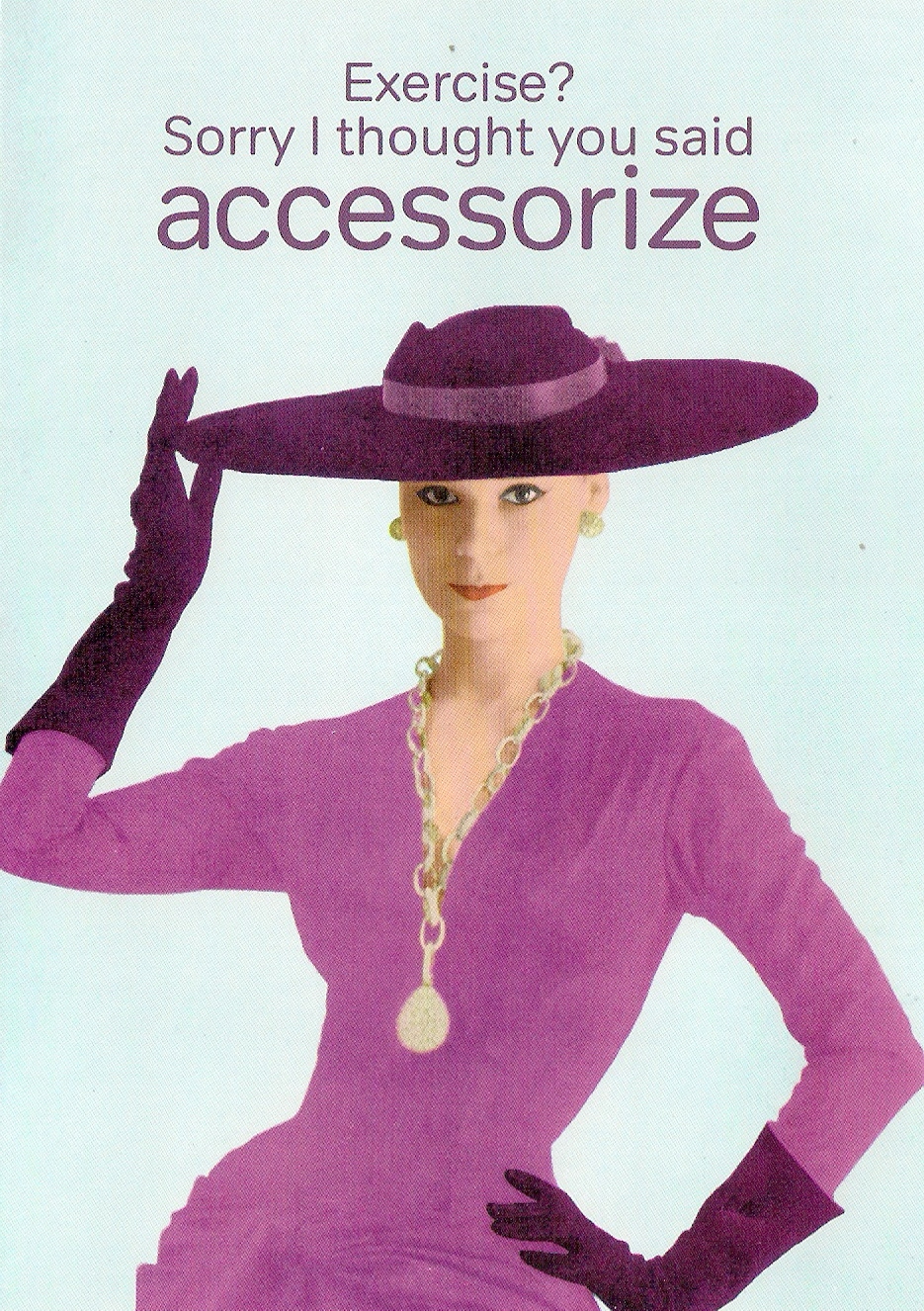
Accessorize greetings card from cathtatecards.com

Monday, 18 February 2013

Poetry

The Scots poet everyone's heard of: Robert Burns
Portrait by Peter Howson
One of the great things about my current Open University course on 20th century literature is that virtually every text I tweet about reading has fans who tweet back to say how much they love it. The novels Orlando (Virginia Woolf), Rebecca (Daphne du Maurier) and Do Androids Dream of Electric Sheep (Philip K Dick) seem particularly popular. And several people agree with me that Katherine Mansfield’s short stories should be more widely read. However, it was TS Eliot's poem The Love Song of J Alfred Prufrock that got the most responses, with several folk tweeting me their favourite lines from it. You may recognise some of these, even if you've not knowingly read the poem:
I have measured out my life in coffee spoons
I should have been a pair of ragged claws / Scuttling across the floors of silent seas.
I grow old . . . I grow old . . . / I shall wear the bottoms of my trousers rolled.
So here's a confession: I rarely read poetry out of choice. Yet when I do, I am full of admiration for its precision, its skilful use of language, its sheer cleverness. Perhaps what holds me (and many others) back is that most poems don't give up all their treasures on one reading. You have to read them over and over again just to understand what they're going on about. And even then a poem's 'meaning' may elude you. But don't let that put you off. I see poetry as proof of that old saying: 'tis better to travel hopefully than to arrive'. 

I'm not going to paste in endless poems - that would make this a very long post. Besides, many are available, free to enjoy, at the click of a mouse. What I've done is list a few of my favourites, with links to sites where you can read them. Choose one and have a go! They’re in no particular order and cover everything from love poetry to sheer nonsense. 

And for you writers out there, poetry is a splendid source of book titles. For example, Val McDermid must surely have taken The Mermaids Singing from this line in ‘Prufrock’: ‘I have heard the mermaids singing, each to each’.

To His Coy Mistress by Andrew Marvell – one of the great romantic poems
The X Files: Bonnybridge, October ’95 by Hugh McMillan – Scottish and hilarious (thanks to Rosemary Kaye for this one!)
The Thought-Fox by Ted Hughes – for every writer 
To A Louse by Robert Burns – Burns is best enjoyed out loud so this link also offers a reading by Robert Carlyle
Jabberwocky by Lewis Carroll – a splendid nonsense poem
Warning by Jenny Joseph – a battle-cry for middle-aged women

Wilfred Owen
commemorative window

Dulce et Decorum Est by Wilfred Owen – one of the greatest anti-war poems ever
Skipping by Marina Sofia – this poem is on the wall above my desk, a source of comfort when I worry about my writing

Do you have a favourite poem? I’d love to read it, so please leave a comment below or tweet me: @janetokane.

Friday, 4 January 2013

I ♥ books

1992: Reading with a cat. What could be nicer?

When I set out to do the Eclectic Reader Challenge last January, reading 12 books in 11 different genres in a year seemed achievable. However, I hadn’t then decided to embark on the final year of my Open University degree. When I signed up in early September to study Course A300: 20th Century Texts, it became obvious I wouldn’t only be sacrificing writing time. The course has 16 set books, ranging from 1930s poetry to 1960s science fiction, and an infinite number of reference books. The amount of reading this requires reminds me of what a tutor said when I studied for a year at Edinburgh University as a mature student: “Reading for pleasure? We’ll soon knock that out of you.”

I hoped then, and still do, that he meant we would have so much course reading we’d have no time to read anything else. Because I can’t imagine ever not wanting to read. How dreadful it would be not to relish choosing the next book to take down from my shelf or select from the list on my Kindle, to no longer feel the thrill of starting that first page. Even if a book disappoints, I still get a sense of achievement at finishing it, and as a writer, it’s instructive working out what went wrong. And if it has been a satisfying read – what joy!  

Reading is a way of life for me, and when I look back to my childhood I can see why. So many memories connected with reading stand out in my mind.

This was c. 1967, so pardon the decor
My parents were (and still are) avid readers themselves, so they knew that with the right groundwork I could develop into one too. Admittedly, growing up as an only child in rural Dorset at a time when there were only three TV channels, I had little choice in the matter. I had to read or take up a sport (I’ll pause briefly for those of you who know me stop laughing at that idea.)

Mum worked as a hairdresser from home in those days, her ‘salon’ a room at the end of the house kitted out with a sink and two hairdryers on wheels. This being the 1960s, she mostly did shampoo-and-sets and the occasional perm, and when each customer’s hair had been put into rollers they sat under a dryer. When I was very young I would persuade some of them to forgo the pleasures offered by the magazines provided and instead read my storybooks to me. As I grew older I got pushier and insisted on reading out loud to a favoured few, the word ‘loud’ being apt – those hairdryers were very noisy.

The books in my primary school’s library – a large cupboard, really – were augmented by fortnightly visits from Dorset County Council’s mobile library or, as it was known then, the Library Van. I’d feel very grown-up climbing up the steps unaided, making my own choices, then cycling home with a basketful of books. Enid Blyton’s Famous Five were my heroes for a long time. I once announced to my parents that I wanted to be called George, though I don’t remember their response. 

Then I progressed to Blyton’s Malory Towers series. This resigned me to having a girl’s name but left me hankering after a boarding-school education with all the lacrosse and midnight feasts that came with it. Mum and Dad took me every Saturday to Beeches Bookshop in Salisbury. The lovely building is still there but Beeches closed down long ago. In the early ‘70s, though, it was stuffed to the rafters with books old and new, most in rows on open shelves, some so precious they were kept in locked glass-fronted cabinets. You could buy four hardback children’s books for £1, and they’d take them back later in part-exchange for yet more. Angela Brazil’s schoolgirl adventures, with titles like The Nicest Girl in the School and A Fourth Form Friendship, were already past their heyday by then but I didn’t care.
1969: I was a swot

When I was a teenager, there being no such thing as young adult fiction back then, I started reading what Mum read: crime fiction. The rest, as they say, is history.

I started this blog post intending to examine the difference between reading for pleasure and reading for study. It’s been hijacked by my childhood recollections, which probably means I’m older than I like to think. Anyway, I have a subject for another post now. In the meantime, what memories of childhood reading do you have?


Thursday, 4 October 2012

What type are you?


I’ve written before about trying to be less of a pantser and more of a plotter now I’m writing my second novel.  This has met with some success. Although I’ll never reach the stage of outlining an entire plot before starting to write, one approach is producing such good results that I doubt I’ll ever stop using it.  I’ve mentioned this in an earlier blog post: developing characters with the Myers-Briggs Type Indicator (MBTI), as recommended by Jeff Gerke in his excellent book Plot versus Character.

You can read in detail about MBTI on Wikipedia, but I don’t want to get too hung up on it, as it’s only a jumping-off point for creating rounded characters who behave in credible ways. In a nutshell, this psychological typing uses four opposing pairs of ways of thinking and acting (labelled dichotomies, although you don’t even need to know that).

  • Extraversion (E) – Introversion (I)
  • Sensing (S) – Intuition (N)
  • Thinking (T) – Feeling (F)
  • Judging (J) – Perception (P)
There are 16 possible combinations of these dichotomies, and there are tests you can do to find out what type you are.  According to the Humanmetrics Jung Typology TestTM  (which is free to take),  I am, apparently, an INFJ and I like what I read about them.

"INFJs are gentle, caring, complex and highly intuitive individuals. Artistic and creative, they live in a world of hidden meanings and possibilities. Only one percent of the population has an INFJ personality type, making the most rare of all types."
They are also ‘as genuinely warm as they are complex’ and are liable to have messy desks! 

All very interesting, you say, but how does this help to create compelling characters? I’ll give you a recent example. My novel calls for a person who runs my main character’s office. She’s reliable, to the extent of being put-upon, but has the potential to be dangerous if ever her devotion to her employer wavers. I’ve called her Helen for now.

Gerke’s book lists the 16 Myers-Briggs personality types with brief descriptions. I read down the list, looking for the one that sounds closest to the vague outline of the character in my head. One leaps out at me, though it’s usually not that clear-cut and I often have to take a second run at the list to identify the best fit. Helen feels like an ISFJ: A serious observer of others, overwhelming desire to serve others, often taken advantage of, responsible.

This is where I deviate from the process suggested in Plot versus Character. I google ISFJ (just the letters, you don’t even need to put in Myers-Briggs) and get page after page of profiles. They overlap, of course, but this serves to emphasise the most prevalent characteristics Helen should have. Then I transfer the characteristics I think are most important or could be useful to the story to one side of a table. Here are a few:

Prizes harmony, withdraws from conflict

An over-protective parent

Abhors waste of money

Rarely gets the praise/recognition deserved

Rich, inner world, excellent memory for details. Sensitive to others’ feelings

Respects tradition and laws

Learns best by doing, not reading theory

Has well-developed sense of space, function & aesthetics. Beautiful home, good interior decorator, great gift-giver

If has negative feelings, these may build up inside until they turn into firm judgements against individuals which are difficult to dispel

Has strong feelings of inadequacy

Family is central to life. Often possessive of loved ones. Has few close friends

Once that’s done, I fill in the other side of the table with examples of how these aspects of Helen’s character can be illustrated or used. Some are trivial: I’ve decided that because of her homemaking compulsion she buys fresh flowers every week for the office. Some may be problematic, e.g. ‘respects tradition and law’ if I decide to make her a suspect, but I can also use the table to see ways around these. So, if Helen can be persuaded to behave badly, this will probably come out of her devotion to her family. Some I leave blank if nothing comes to mind at this stage. I'll revisit this profile regularly when I'm plotting, and for writing scenes Helen appears in.

It took almost a day to create this profile of Helen, but I consider that time well-spent. I know her well enough to plunge her into the action. She’ll still surprise me – that’s one of the joys of writing – but I’m confident that I now have the tools to make her believable and well differentiated from my other characters.

Do you pre-plan your characters or do they develop organically as you write? I’d love to know, so please leave a comment below (if you can, I know Blogger is uncooperative sometimes). And if you try out the Humanmetrics Jung Typology TestTM  on yourself, tell me what you think of the results.

Wednesday, 5 September 2012

Going places

Picture by Paul Stevenson, @goldylookfleece
I’m doing my best to apply the lessons I learnt while writing No Stranger to Death to creating its sequel. This includes recognition of my shortcomings and finding ways around them, rather than railing against an inability to carry out tasks I’m certain other people could accomplish standing on their heads (which is itself a skill I never mastered).

Take descriptions, especially of buildings and places. I am, apparently, one of a rare breed: under-writers. My first draft of anything is pretty sparse and editing usually means adding words rather than taking them away. I lost marks for this in my most recent OU course, with my tutor telling me that although I ‘write well’, my sentences and paragraphs are far too short for the academic world. 

While a propensity for brevity isn’t necessarily a bad thing if your main aim is to tell a first-rate story, it does stand in the way of conjuring up the magic ingredient which writers these days are encouraged to strive for: a sense of place.

I didn’t choose to set my books in the Scottish Borders simply because it’s ‘what I know’, but more because it’s what my main character doesn’t know. As an incomer to rural Scotland from an English city, Zoe isn’t just challenged by unfamiliar people and disturbing events but by these alien surroundings. She comes across sights, sounds and smells she’s never experienced before, and yet – alright, I admit it, like me – she finds unexpected pleasure in many of them and gradually starts to feel at home. This is all part of her ‘journey’, her personal development.

So, how to convey what the Borders is like? I’ll leave it to VisitScotland to inform the world about our castles, abbeys, stately homes and museums, and Zoe is unlikely to take up golf any time soon. This is where a notebook, latterly a smartphone, comes in handy. Sometimes driving, more often walking the dogs, I record the small things I encounter. The blue flash of a kingfisher, the sound of a chainsaw in the distance (would a true ‘townie’ know what it was?), the smell of woodsmoke. Stuff that makes me smile, like watching a border collie (what else?) herd sheep up a narrow road, and that makes me sad, like a young deer dead on the verge.

Rather than try to invent buildings, I use elements of existing ones. The picture below is  of a large house I’ve visited a few times in the past. Its frontage, galleried hall and huge coloured-glass skylight are combined in Book 1 with the kitchen and a dressing-room from another house I worked at for a time. 
An ideal setting for unpleasant goings-on?
For more general views of the area, I know I can turn to Twitter friends who are keen photographers. Paul Stevenson, who goes by the Twitter name of @goldylookfleece, kindly emailed me the gorgeous picture at the top of this post (and agreed to it appearing here) when I asked him if he had any landscapes with poppies.

When I need to write a detailed description of a particular setting, I go in search of one or maybe several which can be combined. Book 2 opens with the discovery of a body which has been pulled out of the River Tweed after being thrown off a nearby bridge. I was pretty certain the Union Chain Bridge, which links England and Scotland a few miles from Berwick-upon-Tweed, would be suitable.


The Tweed: England on one side, Scotland on the other

The Union Chain Bridge
I found lots of photographs online of this bridge, as it’s famous for being the oldest suspension bridge still carrying road traffic. However, my recent visit told me so much more than a Wikipedia entry and Flickr images could. For example, the Union Chain Bridge:
  • undulates when a car goes over it, which feels like you’re standing on a boat
  • creaks and groans, and if there’s a breeze the vertical struts rattle
  • is partly covered in green paint that’s flaking off in large patches
Not pretty but ideal for my purpose
These observations have enabled me to describe not just the bridge itself but Zoe’s experience of it. And – an unexpected bonus – that flaking paint has become a clue for the police when deducing how the body ended up in the Tweed

Perhaps when I’m published I won’t have time to research locations away from my desk. But until then I shall continue to seek them out, take photographs and note other details such as sounds and smells, to enrich my writing.

Do you feel the need to base your locations on real places, or is it just me?

Thursday, 9 August 2012

Book 2: Making progress


A writer at Harrogate
A triumph of hope over experience. Often quoted, this remark is said to be Samuel Johnson's response on hearing of an acquaintance's second marriage. It could also apply to what I'm doing now: writing a sequel to a first novel which has yet to find its audience. I've always been an optimist.

Work on this second novel, called A Stranger Coming Home, is going well. Having had no deadline (and no idea what I was letting myself in for) when I started writing No Stranger to Death, I was able to try out different creative techniques to find what suited me best. This time around I already have my modus operandi. Or so I thought.

As I’ve blogged about in the past, I discovered to my surprise that I’m a pantser, incapable of planning an entire novel before I write it. I do, though, need to know what crime it centres around, and have an ending to work towards. Book 2 being a sequel, I already have a setting and a readymade cast of characters, bar the ones killed off or otherwise rendered unavailable by events in Book 1.

At the risk of sounding a complete amateur, I admit I enjoy reading how-to-write books, though definitely not the ones promising you can write a novel in an unfeasibly short space of time if you use their foolproof system. If I get stuck (‘blocked’ would be over-stating it) I find reading a textbook prods my imagination into action. Recently I’ve been helped in this way by Jeff Gerke’s Plot versus Character.

Gerke’s premise is that there are two types of writers: those for whom plot ideas come easily, and those more adept at creating characters. I put myself firmly into the first camp, and have thus far shied away from grinding out detailed character biographies as I know many ‘plotters’ do. However, Book 2 requires someone who is only referred to in Book 1 to make an appearance, so I gave Gerke’s ‘layering’ technique for character development a go. And it worked.

From deciding which of the 16 Myers-Briggs personalities he is, to making his personal heroes Bernie Ecclestone and Jackie Stewart, and having him thrown out of agricultural college in his first term, I’ve mapped out Robbie Mackenzie. In the process, how he influences events and reacts to situations has become clear, and his part in the drama will be far bigger. He has also supplied an alternative – or possibly additional – ending to the entire novel.

I can’t promise to create every one of my characters in such detail, but now I have one more tool to use when needed. And this has been a timely reminder that in many ways, but especially as a writer, I also continue to be a work in progress.