Showing posts with label Twitter. Show all posts

Saturday, 10 May 2014

Meeting my readers

There's no such thing as an average reader

I was privileged to spend time with the novelist Sylvian Hamilton in the years leading up to her too-early death in 2005. We talked about books and writing, and she shared some of the exciting aspects of being published, like the creation of the cover design for what was sadly destined to be her final book, and her scrapbook of fan mail. Back then, if a reader enjoyed a book, the only way they could communicate this to the author was by writing to them, usually via their publisher. I remember Sylvian’s delight whenever a new card or letter arrived, and how carefully she added them to her collection.

These days, readers have a plethora of ways to contact authors and give their verdicts on books they’ve read. No Stranger to Death has been reviewed on Amazon (all 5-stars, so far), GoodReads and blogs, and I’ve received messages from readers via my own blog, Facebook and Twitter. I also have friends who live locally who’ve told me to my face what they thought. However, last week was the first time I met total strangers who had read my book. I attended the monthly get-together of a local book group, and a few days later, I stood up in a village hall to do a reading and answer questions. Here are some of the things these experiences taught me.

Readers don’t care how a book gets published
None of the book group members realised I had self-published No Stranger to Death. Some had bought it from a shop, others had used Amazon, one had taken it out of a library. Their motivation for choosing to read it was that I was a local author and ‘it looked good’. While I was selling and signing copies in the hall, no one asked who my publisher was. That said, an elderly gentleman expressed concern that he had ‘only’ borrowed a copy from the library: did I get any income from that? I was happy to reassure him that Scottish Borders Council had purchased the libraries’ copies from me, and told him about PLR. 

You can never know your characters well enough
Although I don’t go as far as noting my characters’ shoe sizes and favourite foods, I‘ve lived long enough with them in my head to know how they would react in most circumstances. But I was completely thrown to be asked what Zoe Moreland’s star sign is. My confession that I didn’t know earned the response that she must be a Scorpio, due to her ‘emotional strength’.

Everyone experiences a book differently
I asked the book group if anyone had guessed whodunit. They had all suspected different characters, one of whom was a kindly doctor, the least likely killer you could hope to meet. And that was why it had to be him: he was ‘too good to be true’. The legacy of multiple murderer Dr Harold Shipman obviously lives on in some people's minds.

Readers can develop feelings for your characters too
I love reading and getting caught up in a story, so this shouldn’t surprise me. But I never expected anyone else to feel so strongly about the people I created. A book-group lady was particularly upset at what a bully one of Zoe’s fellow doctors was, given all the other awful things happening to her at the same time. Another reader said that when she got to the part where Zoe’s car goes out of control she found herself saying, ‘No, no, no’ out loud. And as for what everyone wants from the book’s sequel: I’ve been told to bring Neil back, make sure Mather and Kate end up together, and tell what happens to Zoe in the light of her mysterious visitor on the very last page.  

How readers choose their next book is a mystery
Remember the book group said they chose to read No Stranger to Death because ‘it looked good’? I asked them what factors contributed to this, but they couldn't point to a single aspect, such as cover design or blurb. Others, however, do have specific criteria by which they select a book. During the second event, I met a lady who enjoys crime fiction but will only buy a book if she doesn’t think it will be ‘scary’. I was happy to reassure her that although I deal with dark themes, she won’t find extreme violence or graphic descriptions of blood-soaked crime scenes in anything I write.

It was amazing and gratifying to hear how characters, places and situations I have created are now in other people’s heads. If I learnt one lesson from meeting readers it is that No Stranger to Death was a different experience for each of them and they all had unique responses to it. These responses are impossible to predict, proving that one of the best piece of advice for writers is ‘Write for yourself’. Write something you would enjoy reading and there’s a good chance others will enjoy it too.

Photos courtesy of www.freedigitalphotos.net

Tuesday, 10 September 2013

You don't know what you don't know

The evidence never lies, Nick

Mark Billingham tells a story about sharing a festival stage with a pretentious literary writer who spoke at length about how she felt her characters’ presence when writing and how they, rather than she, dictated the story. When the spotlight turned on Mark, he explained his own creative process thus: ‘I just make shit up’.  

I’m certainly of the making-shit-up school, but sometimes my imagination needs to be augmented with solid facts. I’m a big fan of research, not just because I don’t like to get things wrong, but because of what I call the ‘You don’t know what you don’t know' principle. While fact-checking, I regularly learn something completely different to, and often more interesting than, what I set out to discover. This happens most often when I involve people, rather than books or the internet, in the process. Here are three examples of how the YDKWYDK principle has helped me in writing No Stranger to Death.

CSI: Scotland
Writing my first novel started with a single idea: using a village’s Guy Fawkes bonfire to dispose of a body. This idea also presented me with my first challenge, to find out the extent to which that body would be destroyed. This was many years ago, when I was a mature student at Edinburgh University, so I made an appointment to meet with someone in the Forensic Medicine department. It was the first time I ever used the ‘I’m writing a novel and need to know . . . ‘ line which I’ve used many times since. Feeling sure they would assign me a student to speak with, I was amazed when it turned out the head of the department had made room in his diary for me, and then overawed when he told me he was used to talking to writers, in fact he often advised Ian Rankin!

This lovely man was so generous with his time and advice. The effect of fire on the human body, he told me, depended on many factors. He offered to show me photographs, but seeing the look on my face, thought better of this. Then he suggested the victim could be wrapped up in something like a carpet, because ‘that way she would be baked rather than burned’. Needless to say, I have used this, and I took great delight in having one of my character ghoulishly describe the dead woman as ‘Chrissie en croute’. In addition, as I got further into the novel, I realised wrapping her in that carpet provided yet another twist to my story, and solved a plot problem which had worried me for some time.

Who do you think you are?
I remember how I got the idea of a body in a bonfire: at a village Guy Fawkes party. But what on earth possessed me to make Kate Mackenzie, my ‘Dr Watson’ character, a genealogist? This was a job I knew nothing about. So, although Kate’s work isn’t vital to the plot of No Stranger to Death, I thought I should at least know what she would have on her desk and what she would spend most of her time doing.

I emailed a genealogist based nearby to find out if she would allow me to ask her a few questions about her job and we agreed to meet at the M&S café at Berwick (oh the glamour of being a writer!). She made genealogy sound fascinating and deserving of so much more than a bit part in my stories. 
They'll never take . . . our freedom!

I learnt that many Americans, while keen to prove they have British ancestors, would much prefer to find they are of Scots descent over English. Apparently, some of them also like to believe they’re related to William Wallace, the 13th-century fighter for Scottish independence, but they have a bigger chance of being related to Mel Gibson, who played him in the film Braveheart! This gem set my pen scribbling, and is now a line spoken by Kate. I’ve also come up with a way of giving Kate’s job a far bigger role in Book Two.

Fight club
During my recent edit of No Stranger to Death before sending it to an external editor, I realised a scene where my main character Zoe Moreland fights off an attacker didn’t work. I rewrote it several times but it remained unsatisfactory and over far too quickly. John saw from my face that things weren't going well and asked me what was wrong. I tried to explain the problem, and the next thing I knew we were acting it out. Without the weapon, I hasten to add. And as soon as we did this, I knew how Zoe would instinctively act and how her attacker would try to prevent her from escaping. Better still, I came up with yet another way to obey this valuable piece of writing advice: think of the worst thing that can happen to your character, then make it even worse.


There is, of course, a downside to research: it can be far too enjoyable and distracting. When I’m struggling to write an awkward scene, it’s easy to kid myself that looking at pictures of tattoos or reading about the derivation of Scots words is a legitimate part of my creative process. Research is up there with Twitter when it comes to being a time-suck for writers, but also like Twitter, it can introduce us to people and experiences with the potential to enhance our writing and our lives.

Sunday, 24 March 2013

As Shakespeare said . . .


 . . . “Whate’er you think, good words, I think, were best” (King John)
I’ve been thinking a lot about words recently. That’s hardly surprising, I hear you say, given that I’m a writer currently studying other writers. But I’m talking about words per se, rather than as the building blocks of prose, poetry and drama. A few things prompted this.

Thanks to Twitter I saw the results of a quest to identify the ‘best’ word in the English language. Sadly I can’t find this now but I remember disagreeing with the results. Given the number to choose from (the Oxford English Dictionary contains full entries for 171,476 words in current use and 47,156 obsolete ones) I would be surprised if consensus can ever be achieved. Bravo to anyone for even trying, though.

The BBC's Scottish news one morning told of delays on the Whifflet railway line. My husband admitted that despite being a Scotsman he didn’t know where Whifflet is and, worse still, he couldn’t understand why I was so taken with the name. I googled it, and discovered Whifflet is a part of Coatbridge to the east of Glasgow, and its name originated from ‘wheat flats’. As you’ll see if you go to Wikipedia, it isn’t as pretty as either name suggests.

Finally, last week I entered a writing competition which required a short poem or story about a made-up word. I might have passed on this, had it not reminded me of a word I occasionally use which came out of a conversation with my husband about where I get my story ideas from (yes, that old chestnut). ‘They come from my imagination, I just make them up’ met with the response ‘There must be more to it than that, or we’d all be able to write’. I admitted I don’t understand quite how my imagination does what it does, and John’s response was ‘See? It’s magic.’ And that was how ‘imagication’ came about. I wrote a poem about this which won’t get anywhere (I’m no poet) but it was fun to do.

All this recalled an interesting exercise I did as part of the Open University’s A215 Creative Writing course a couple of years ago. After writing the letters of the alphabet in a column, we had to write two words against each letter: one that we liked because of its sound, the other because of its meaning. Then we had to go down the list circling our preference in each pair of words. So, for example, against ‘L’ I put ‘luminous’ (sound) and ‘laughter’ (meaning). Luminous was my favourite.

The course manual revealed a fascinating fact: nearly everyone will exhibit a marked preference for one aspect – sound or meaning – over the other. It’s very rare to find an even split. My results bore this out: I clearly (25 out of 26 words) appreciated words more for their sound than their meaning.

Does this influence my writing? Perhaps, in a subliminal way. I suspect, though, that it’s more likely to have an impact on my reading and appreciation of others’ writing, especially poetry. It certainly didn’t help my attempts to write poetry, which was the stated aim of the exercise.

Have a go yourself and see what aspect of words – their sounds or their meanings – you prefer. Then leave a comment below or tweet me - @janetokane - to say how you get on and if the result surprised you or confirmed what you already knew.

And finally, to demonstrate the importance of words: 


Acknowledgements:
Images from freedigitalphotos.net
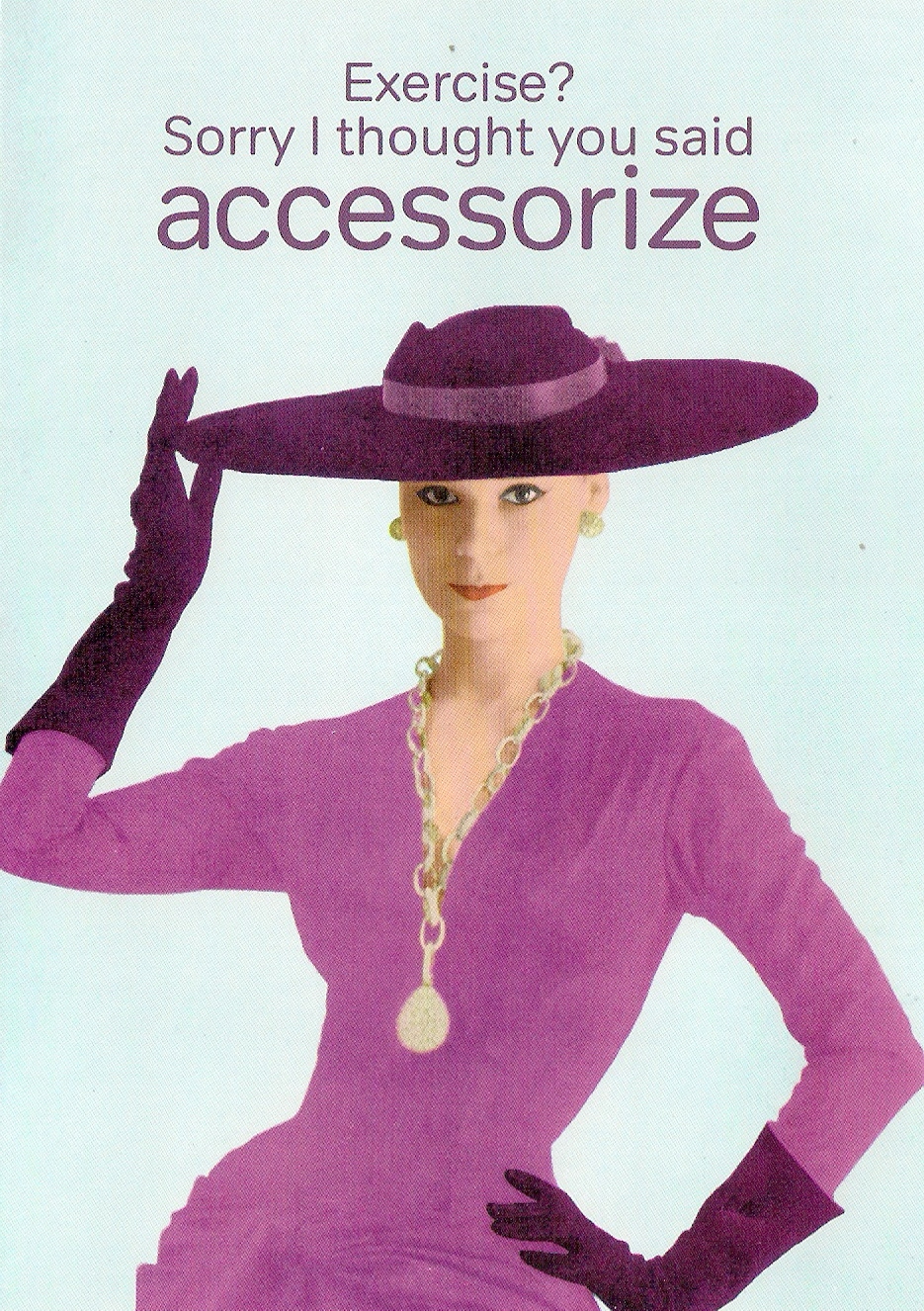
Accessorize greetings card from cathtatecards.com

Wednesday, 5 September 2012

Going places

Picture by Paul Stevenson, @goldylookfleece
I’m doing my best to apply the lessons I learnt while writing No Stranger to Death to creating its sequel. This includes recognition of my shortcomings and finding ways around them, rather than railing against an inability to carry out tasks I’m certain other people could accomplish standing on their heads (which is itself a skill I never mastered).

Take descriptions, especially of buildings and places. I am, apparently, one of a rare breed: under-writers. My first draft of anything is pretty sparse and editing usually means adding words rather than taking them away. I lost marks for this in my most recent OU course, with my tutor telling me that although I ‘write well’, my sentences and paragraphs are far too short for the academic world. 

While a propensity for brevity isn’t necessarily a bad thing if your main aim is to tell a first-rate story, it does stand in the way of conjuring up the magic ingredient which writers these days are encouraged to strive for: a sense of place.

I didn’t choose to set my books in the Scottish Borders simply because it’s ‘what I know’, but more because it’s what my main character doesn’t know. As an incomer to rural Scotland from an English city, Zoe isn’t just challenged by unfamiliar people and disturbing events but by these alien surroundings. She comes across sights, sounds and smells she’s never experienced before, and yet – alright, I admit it, like me – she finds unexpected pleasure in many of them and gradually starts to feel at home. This is all part of her ‘journey’, her personal development.

So, how to convey what the Borders is like? I’ll leave it to VisitScotland to inform the world about our castles, abbeys, stately homes and museums, and Zoe is unlikely to take up golf any time soon. This is where a notebook, latterly a smartphone, comes in handy. Sometimes driving, more often walking the dogs, I record the small things I encounter. The blue flash of a kingfisher, the sound of a chainsaw in the distance (would a true ‘townie’ know what it was?), the smell of woodsmoke. Stuff that makes me smile, like watching a border collie (what else?) herd sheep up a narrow road, and that makes me sad, like a young deer dead on the verge.

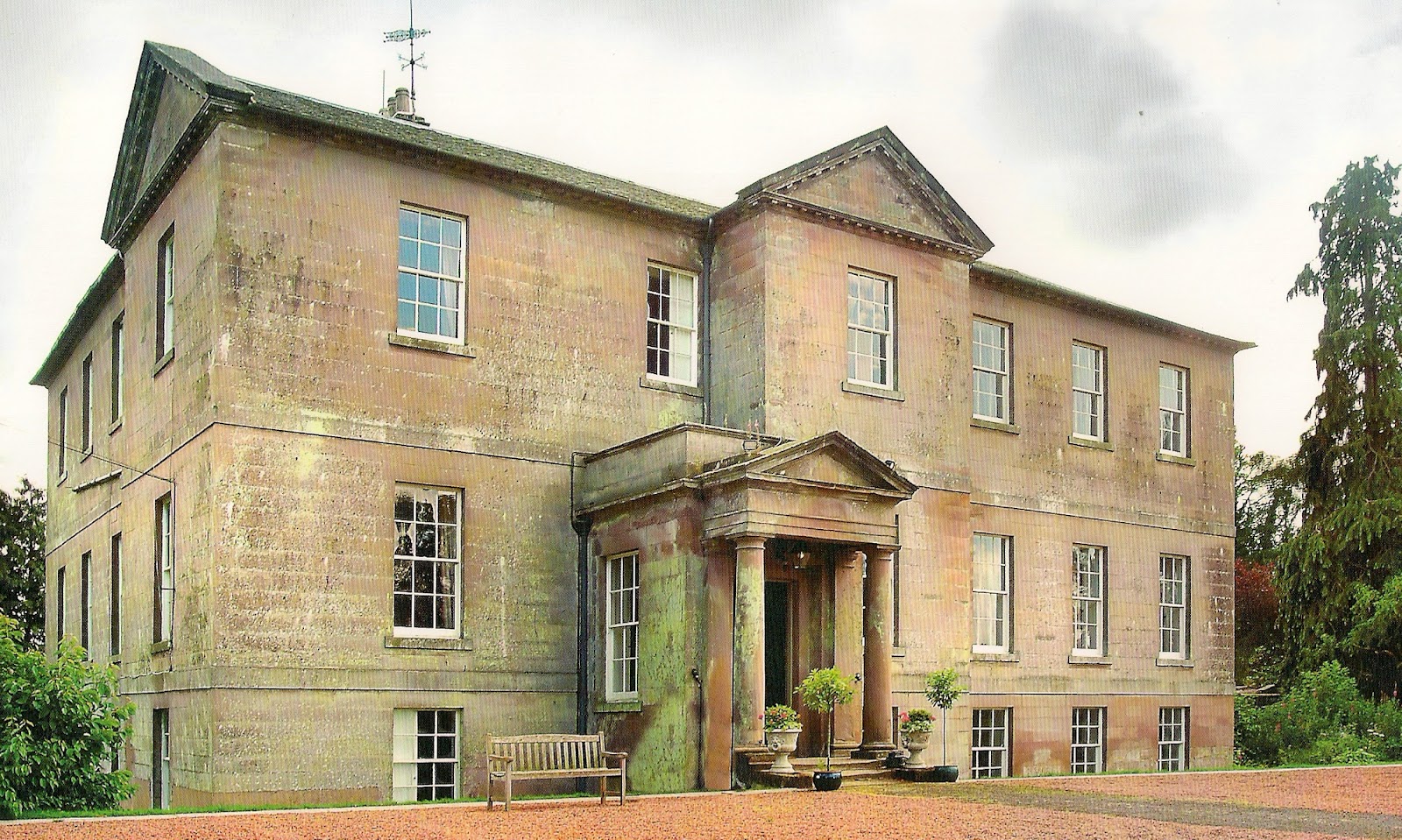
Rather than try to invent buildings, I use elements of existing ones. The picture below is  of a large house I’ve visited a few times in the past. Its frontage, galleried hall and huge coloured-glass skylight are combined in Book 1 with the kitchen and a dressing-room from another house I worked at for a time. 
An ideal setting for unpleasant goings-on?
For more general views of the area, I know I can turn to Twitter friends who are keen photographers. Paul Stevenson, who goes by the Twitter name of @goldylookfleece, kindly emailed me the gorgeous picture at the top of this post (and agreed to it appearing here) when I asked him if he had any landscapes with poppies.

When I need to write a detailed description of a particular setting, I go in search of one or maybe several which can be combined. Book 2 opens with the discovery of a body which has been pulled out of the River Tweed after being thrown off a nearby bridge. I was pretty certain the Union Chain Bridge, which links England and Scotland a few miles from Berwick-upon-Tweed, would be suitable.


The Tweed: England on one side, Scotland on the other

The Union Chain Bridge
I found lots of photographs online of this bridge, as it’s famous for being the oldest suspension bridge still carrying road traffic. However, my recent visit told me so much more than a Wikipedia entry and Flickr images could. For example, the Union Chain Bridge:
  • undulates when a car goes over it, which feels like you’re standing on a boat
  • creaks and groans, and if there’s a breeze the vertical struts rattle
  • is partly covered in green paint that’s flaking off in large patches
Not pretty but ideal for my purpose
These observations have enabled me to describe not just the bridge itself but Zoe’s experience of it. And – an unexpected bonus – that flaking paint has become a clue for the police when deducing how the body ended up in the Tweed

Perhaps when I’m published I won’t have time to research locations away from my desk. But until then I shall continue to seek them out, take photographs and note other details such as sounds and smells, to enrich my writing.

Do you feel the need to base your locations on real places, or is it just me?

Tuesday, 10 April 2012

Lucky 7: Seven lines from new works

Winter's Gate by Charles Simpson*

My thanks to both Susan Williams and Isabel Costello who have tagged me to take part in Lucky 7: Seven lines from new works. The rules are simple:

  1. Go to page 77 of your current MS or WIP
  2. Go to line 7
  3. Copy the next 7 lines, sentences or paragraphs and post them as they’re written
  4. Tag 7 more writers and let them know.
My list of 7 people I’ve tagged is at the end of this post. Who to choose was a tricky decision. In the end, I purposely chose writers who I haven’t followed on Twitter for very long, as I’d like to get to know them better. There’s absolutely no pressure to take part if you don’t want to or haven’t got time.

It’s been fascinating, reading other writers’ excerpts; I hope you’ll get something from mine too. These 7 lines are from my first crime novel, No Stranger to Death, which I’m currently transferring to Scrivener as a training exercise. Assuming I master the software, I plan to write the follow-up, which is at the planning stage, straight into it.

To put these words into context, you need to know that our heroine Zoe is in the pub with her new friend Kate who lip-reads because she’s deaf.


‘No one need hear, silly. You don’t have to talk out loud.’
Feeling foolish, Zoe silently mouthed an account of Hazel and Ray’s argument. Kate waited until she’d finished then, speaking more quietly than usual, asked, ‘Any idea what it was all about?’
‘Your guess is as good as mine. But it must have something to do with Chrissie’s death.’ Zoe brought out her purse, preparing to go up to the bar for more drinks.
The front door opened and Neil rushed in.
Over to you, if you’re so inclined:

 *Charles Simpson kindly agreed to my use of his image on my blog. I hope one day to own an original. You can see his work at http://www.csimpson-art.co.uk/

Thursday, 15 March 2012

I feel like I already know you


The title of this week’s blog is something Liverpool writer Cath Bore recently tweeted to me when we discovered we were both going to CrimeFest in May. It was a lovely thing to say and it got me thinking. How well is it possible to ‘know’ someone through Twitter?

I once had a line manager who, when conducting job interviews, would sit back and say to the interviewee, ‘Tell me about yourself’. He argued it was significant what aspects of their lives his victims chose to talk about, and in what order. Another friend, when given job applicants with virtually identical qualifications and experience, would call in for interview the ones who had the most interesting hobbies.

Solo: my first-born
Remembering these two individuals, I slaved over my Twitter profile until I felt it captured the essential Janet O’Kane. Or rather, the one I wished to present to the world. Given everything I could say, especially when restricted to 160 characters, did I want to share my age, my marital status, the fact I’m no one’s mum? As I joined Twitter to reach out to other writers, all that personal stuff seemed unnecessary. I put my writing life to the fore, but felt my (genuine) passion for poultry gave me a quirky side I’d be happy to exhibit. 
 
It’s apparent that not everyone gives their profile as much thought. And that’s fine by me. Just don’t expect me to follow you if you don’t volunteer at least a few nuggets of information about yourself. You may believe you’re being intriguing, I can’t help thinking you’ve got something to hide and/or something to sell.
Getting upset?

Nearly all the people I follow make the most of those 160 characters. I’m keen to make contact with those who write, read, like chickens, cats, dogs. Or I’ll follow someone whose profile makes me smile. For example, Dave Jackson, author of Pariah and The Helper, claims that despite the dark books he writes, ‘I’m actually a very nice guy’. Steve Mosby simply states that he’s been, ‘Upsetting people with fiction since 2003’.  However, I’m bemused by Piers Morgan’s unfunny profile: ‘One day you’re cock of the walk, the next a feather duster’. Then again, nothing could make me want to follow him. Ever.

I'm of the opinion that tweeting reveals more about the originator than they might expect. Over time – and I think time is the key here – you learn about their routines, lifestyles, sources of pride, annoyance and stress, hobbies, the arrival of new pets and departure of much-loved older ones. They sing the praises of books they’ve loved, recommend films they’ve enjoyed, slam the TV programmes they think should never have been made (anyone want to stand up for The Body Farm? No, thought not). You follow links to stuff they find interesting/appalling and to their own blogs, which offer up even more of their characters.

Is this like real life, or are our Twitter personalities pure artifice? Are we all just putting on an act? I suspect I’m not alone in not tweeting if I’m truly upset about something. Now my first novel is out on submission I can’t share the ups and downs of that process. And I don't really 'do' politics, except for commenting on the latest in the Scottish independence debate (I'm not for it, just in case you wondered). But in real life we often don’t reveal our innermost feelings to any but our nearest and dearest anyway.

During 2012 I’m going to meet a lot of my Twitter friends in real life. Next month I’m driving down to the launch of Mari Hannah’s first novel at Hexham Book Festival. In May, I’ll be in Bristol for CrimeFest, which is being attended by many tweeps who share my enthusiasm for crime fiction. June sees me and My Scotsman holidaying in Norfolk, when I’m meeting up with another Twitter friend for the first time. And September is the month when crime-writing types will be sweeping northward for the Bloody Scotland festival at Stirling.

As I've mentioned before, not being the most outgoing of women, I find it hard to walk into a roomful of strangers (unless I’m carrying a tray of drinks or canapés). Now though, despite never having met most of them, the people I talk with on Twitter aren’t strangers. So I’ll be seeking them out, smiling, hugging them. That's when I’ll discover if Twitter accurately conveys people’s true natures. And whether Dave Jackson really is that nice guy he claims to be.

Tuesday, 6 March 2012

Hanging up my L-plates?


This writer's best friend

I’m now looking down into the abyss waiting to be filled with words which is planning Book 2. Writing it is a daunting prospect for many reasons, not least because I intermittently worked on Book 1, No Stranger to Death, over a long period. This time I’m giving myself a year to get Book 2 written, edited several times and polished to a shine.

Below are some of the things I learnt during the writing of Book 1 which I’m hoping will help me with its follow-up.

Plotting: There’s no telling what will work for you
Because I’m by nature a planner I started out imagining I could (or, rather, should) plan the entire novel before writing it. I wrestled with the enormity of that task, and felt worthless when I couldn’t do it. In desperation, with the idea of an opening that revolved around the discovery of a body in a Guy Fawkes bonfire, I just started writing. And soon the pages began to fill with characters and events. 

Every time I ran out of plot I grabbed one of my many ‘how to write’ books and read. If I struggled with making a character come to life I’d write a page or two in their voice telling me about their past. Eventually an outline for the next few chapters would reveal itself to me. And so it went on.

Several strands of the story, such as the resolution of the murder which kick‑started it, needed to be brought together towards the end of the novel. This required more detailed planning, although by then I had written the final chapter so I knew where I was heading. Long walks with the collie were great for working out particularly knotty problems. A bit like passing my driving test (on the 3rd attempt), I couldn't quite believe it when I completed the task.

I hope I haven’t made this sound easier than it was. Because it was staggeringly difficult. But by the time I got about two-thirds of the way in I felt able to relax. I’d travelled so far in this strange fashion, there was no reason why I couldn’t get to the end.

It turns out I’m more of a pantser than a planner. No one’s more surprised than me.

Editing: It is possible to make a silk purse out of a sow’s ear
We’re all familiar with the saying that every first draft is shit (was it Graham Greene?). But it’s hard, when you’re starting out, to accept that means yours too. When I write copy for business clients I wouldn’t dream of showing them anything without editing it time and time again. This is especially true when I’m writing for the internet, which demands precision and brevity. So how could I possibly imagine being able to write 96,000 words and get them right first time?


Once I’d got that revelation out of the way I ploughed on with writing the first draft. I only reviewed what I’d written the day before. Any ideas which came to me about changes I should make were recorded in a separate file to look at later.

I actually enjoyed the editing process. However, it took much longer, and involved lots more reiteration than I’d expected. Reading out loud and using my Kindle have proved invaluable. And I’ve learnt to trust my instinct: if I’m the least bit unsure how good a phrase, sentence or paragraph is, I work on it.

Research: You don’t know what you don’t know
I’ve heard writers say they don’t do any research until after they’ve written the book, when they go back and fill in the gaps. This stops them wasting time by getting bogged down in superfluous information. I recognise this is sensible – there are already enough distractions (see Social Media below) conspiring to keep us away from writing. However, the ‘experts’ I’ve consulted have each done a lot more than just answer my questions.

For example, I asked a forensic pathologist for information about how extensively a body in a Guy Fawkes bonfire would burn up. His response, that this depended on different factors, wasn’t particularly helpful. Then he said, ‘But you could have the victim wrapped in a carpet, and that way she’d be more baked than burned.’ This was horrible – and irresistible. It also enabled me to add a further layer of complexity to what occurred before the body was put into the fire.

Most people are happy to talk about their job if you ask them nicely enough. I’ve only been rebuffed by one person – a genealogist – so far. I went on to find another professional in that field who said yes. She was lovely and gave me a lot more material than the first chap probably would have, as well as a brilliant one-liner I’ve used in the novel.

Social media: ‘Building a platform’ can be fun
In common with many writers I’m not a party animal. I enjoy the company of others, but in small groups or better still on a one-to-one basis. I was happy to have a website, blog a bit on it, but start talking, albeit via the internet, to complete strangers? Not for me! Or so I thought. Then, almost a year ago, I went on one of Nicola Morgan’s training events for aspiring writers. And came away having promised to give Twitter a try.

It was strange at first, talking to myself. But gradually I gained enough confidence to respond to others’ tweets, some of which developed into conversations. As at today I’ve tweeted over 4,500 times, am following 417 tweeps (I don’t like that word) and have 370 followers. I’m still not particularly gregarious, but I have made friends. And, I’m delighted to say, I’ll be meeting some of them in real life during 2012, mainly at book-related events. Entering a room full of strangers suddenly got a lot easier.

I’ve now dipped my toe into Facebook (but have a lot of catching up to do) and yesterday signed up to Pinterest. Will any of this make Book 2 easier to write and improve my chances of getting published? Hmm. Probably not. But I think that’s the best attitude for an unpublished writer to have. Enjoy social networking and look upon any other benefits as a bonus.

This isn’t, of course, everything I’ve learnt during my journey from ‘Chapter 1’ to ‘The End’. But, as I've already said, writing for the internet involves precision and brevity. So I’ll stop here. And anyway, I’ve got a novel to write.

If you’re a writer, what lessons have you learnt? I’d love to hear about them, so please leave a comment below.