Thursday, 8 August 2013

Facing facts

I’ve been giving my ‘image’ (dictionary definition: ‘the personality presented to the public by a person, organisation, etc’) a lot of thought since I decided to self‑publish No Stranger to Death. Does an author’s image actually matter when readers choose the books they want to buy or borrow from the library?

Some writers regard the results of their labour as ‘art’ rather than a commodity. However, increasing numbers of books are now sold in supermarkets and online at knockdown prices. We may not like it, but books are subject to the same market forces as the proverbial cans of baked beans. Why else are publishers so keen on series rather than standalones? They are relying on brand loyalty, the consumer’s perceived need for reassurance that their next reading experience will be the same as their last. This is happening elsewhere in the creative industries too. Die Hard 6 anyone?

Where does this leave those of us who self-publish? I may not choose to write a series (in fact, No Stranger to Death will have a sequel), but I’d be foolish not to adopt other business techniques to maximise my sales. And this brings me back to the topic of image. Can and should writers create images which may differ from who they really are, in order to sell more books?

Here’s an interesting example of how something as simple as a photograph can be used to present differing faces of a writer. Those of you who have met him will agree that this affable-looking chap is the Michael J Malone, Scottish poet and crime-writer, that we know:


However, in another of a series of photographs by Bob McDevitt Photography, Michael looks rather sterner:


And finally, in this one – which Michael has chosen for his Twitter avatar – he looks positively menacing, the epitome of an author of dark and gritty crime fiction. Which he is, so this image works for him.


In preparation for the publicity I’m hoping to generate around November 5th, when my novel is published, I went to have some professional pictures taken. The header to this blog is one of them. My lovely photographer, Linda Sneddon, had me pose in a graveyard and reproduced some of the shots in monochrome. Despite all this, I must face the fact that I could never look anything other than what I am: a blonde, smiley, middle-aged woman who wears a lot of turquoise.

Pretending to be someone you’re not must be exhausting and is probably doomed to failure, especially in this age of social media. So I’m not going to even try. Phew, one less thing to worry about!

Wednesday, 24 July 2013

Remember, remember, the 5th of November . . .


One of my favourite radio programmes is I’ve Never Seen Star Wars, in which Marcus Brigstocke invites celebrity guests to try new experiences. For example, Ian Hislop went to buy a pair of jeans for the first time ever. That was funnier than it sounds. Trying different foods is popular, most memorably jellied eels and, another time, tofu. So, I wondered, what would my list of ‘never done that’ consist of? Here's what I came up with.

I’ve never:
  • Eaten sushi or oysters
  • Seen Mama Mia
  • Read War & Peace
  • Driven on a motorway
  • Had a tattoo
  • Been camping or skiing
  • Published a book

These will all probably remain undone. Except that last one. Yes, this is a roundabout way of announcing that from November 5th 2013 my first novel, No Stranger to Death, will be available on Amazon as an ebook and a paperback.

I’m excited and scared in equal measures. 


I'm planning a party too . . .
Pictures courtesy of freedigitalphotos.net


Thursday, 4 July 2013

On no longer being a student


So, farewell Open University. It’s been great, even though sending off the final assignment of my final course was an anticlimax. That’s the trouble with living miles from the nearest shop and working from home: no easy way to buy cakes and no one to share them with. Now I have to wait until August to find out my final mark for A300 Twentieth Century Texts and how good a degree it’s helped me achieve. I’m lucky that nothing but my self-esteem depends on this outcome, but I’m still anxious to have done well.

I’ve written before about how I ended up doing an OU degree so I won’t repeat that. Here are the modules I studied (a year at Edinburgh University saved me two OU ones):

·         A207: From Enlightenment to Romanticism, 1780-1830. This wide-ranging course covered music, philosophy, science, poetry, drama, art, architecture and social history. The essays I wrote included ones on Goethe’s Faust, Mozart’s Don Giovanni, Turner’s depiction of the Battle of Waterloo, and Robert Owen’s social experiments at New Lanark.
·         A215: Creative Writing. This course included, as the OU website puts it, ‘exercises and activities designed to ignite and sustain the writing impulse’. As well as short fiction, we produced poetry and travel-writing. Each piece of work submitted had to be accompanied by a reflective commentary, providing details of how it was conceived, the process of drafting and editing, and how difficulties were overcome. Quite a lot more than answering that old chestnut 'where do you get your ideas from?'.

Monument Valley
·         AA310: Film and Television History. This was by far my favourite course, not least because it necessitated watching lots of DVDs! I studied, among other film genres, westerns (which inspired our visit to Monument Valley in 2011), British war films, 1960s spy thrillers and post-WW2 European cinema. The TV element included sci-fi and soaps. I did my end-of-course project on the classic serial on British television, writing about the adaptations of I, Claudius (first shown in 1976, and again very recently) and Moll Flanders (1996). 
·         A300: 20th-Century Texts. This was my final course and I’ve blogged about it in some detail already.

The benefits of studying with the OU have turned out to go far beyond interpreting texts, remembering facts and getting good grades.  Here are just a few of the things my studies have taught me about myself:

·         I can take on a huge commitment (both in terms of time and effort) and see it through to the end.
·         I work best with deadlines.
·         Few tasks are insurmountable. I’ve lost count of the occasions when I read an assignment title for the first time and thought ‘I can’t do this’. But I did. With one exception (see below).
·         I discovered I can’t write poetry to save my life, although I do enjoy reading and studying other people's.
·         I may be a pantser when writing fiction, but when it comes to academic writing I’m a planner through and through.
·         I enjoy reading ebooks for pleasure but when I’m studying, a physical book wins every time. 

I'm now familiar with words like palimpsest, hypallage, scotoma, hermeneutic, belleslettres and more –ologies than you can shake a stick at. And I learnt other lessons too, like always prepare for the unexpected, especially when a deadline looms. I managed to cope when a virus rendered my computer inoperable a week before an essay was due in, mainly by making the engineer feel so sorry for me that he moved my job to the front of the queue. But what on earth was I supposed to do when the handle mechanism on my study door broke the day before an essay was due in, leaving me unable to get inside the room? I had to wait until my husband came home and kicked the door open. It was such a bizarre excuse for needing an additional day that my tutor had to believe me.

So, will my experience of studying with the OU help my career as a writer?  Look again at the things I’ve learnt: commitment, working to deadlines, persevering with seemingly impossible tasks. I think the answer has to be ‘yes’, don't you? 

I'll definitely be celebrating in August with ice cream cakes from Giacopazzi's!

Monday, 22 April 2013

Nearly there!


It feels like I’ve been working towards getting an Open University degree forever, not just for the last five years. Actually, the process started in 1999 when I first contacted Edinburgh University about studying there. I managed one glorious year studying English and Scottish Literature but by then grants had been abolished and tuition fees were being introduced. There was no way we could afford for me to continue: I had to shelve my academic ambitions and get a job.

Fast forward a few years and my husband’s new business is doing well enough for me to reduce my working hours. However, the prospect of returning to frequent 50-mile drives each way to Edinburgh no longer appealed, so I approached the OU. And to cut a long story short, here I am with just 3,000 words standing between me and a BA (Hons) in Humanities. I have until noon on 23rd May to deliver my final assignment for the A300 20th Century Texts module. This is an EMA, an end-of-module assessment. It’s worth nearly the whole of the rest of the assignments put together and will influence how good a degree I get.

I’m lucky, I can afford to spend a lot of time on my EMA. I don’t work fulltime, I have no children to care for. I salute those who do, and are still determined to study. I must limit my time on Twitter and this will be my last blog post (yes, I know they aren’t very frequent anyway!) for a good while. So, in the spirit of sharing, here’s a summary of the task which lays ahead of me.
You are the sole judge of a new literary competition in which you have to choose the best novel of the twentieth century. The preliminary shortlist is made of up several texts from the A300 module and one novel of your choice.  In an essay of 3,000 words:
  1. Elaborate the criteria to be applied in choosing your winning novel. This discussion must be informed by the theoretical and critical debates in the study material.
  2. Analyse two of the novels, the one you think should win the prize and one of the others.
I’m going to write about Pat Barker’s Ghost Road, which is a set book, and Robert Jenkins’ The Cone Gatherers, a wonderful Scottish novel.

Wish me luck!

Sunday, 24 March 2013

As Shakespeare said . . .


 . . . “Whate’er you think, good words, I think, were best” (King John)
I’ve been thinking a lot about words recently. That’s hardly surprising, I hear you say, given that I’m a writer currently studying other writers. But I’m talking about words per se, rather than as the building blocks of prose, poetry and drama. A few things prompted this.

Thanks to Twitter I saw the results of a quest to identify the ‘best’ word in the English language. Sadly I can’t find this now but I remember disagreeing with the results. Given the number to choose from (the Oxford English Dictionary contains full entries for 171,476 words in current use and 47,156 obsolete ones) I would be surprised if consensus can ever be achieved. Bravo to anyone for even trying, though.

The BBC's Scottish news one morning told of delays on the Whifflet railway line. My husband admitted that despite being a Scotsman he didn’t know where Whifflet is and, worse still, he couldn’t understand why I was so taken with the name. I googled it, and discovered Whifflet is a part of Coatbridge to the east of Glasgow, and its name originated from ‘wheat flats’. As you’ll see if you go to Wikipedia, it isn’t as pretty as either name suggests.

Finally, last week I entered a writing competition which required a short poem or story about a made-up word. I might have passed on this, had it not reminded me of a word I occasionally use which came out of a conversation with my husband about where I get my story ideas from (yes, that old chestnut). ‘They come from my imagination, I just make them up’ met with the response ‘There must be more to it than that, or we’d all be able to write’. I admitted I don’t understand quite how my imagination does what it does, and John’s response was ‘See? It’s magic.’ And that was how ‘imagication’ came about. I wrote a poem about this which won’t get anywhere (I’m no poet) but it was fun to do.

All this recalled an interesting exercise I did as part of the Open University’s A215 Creative Writing course a couple of years ago. After writing the letters of the alphabet in a column, we had to write two words against each letter: one that we liked because of its sound, the other because of its meaning. Then we had to go down the list circling our preference in each pair of words. So, for example, against ‘L’ I put ‘luminous’ (sound) and ‘laughter’ (meaning). Luminous was my favourite.

The course manual revealed a fascinating fact: nearly everyone will exhibit a marked preference for one aspect – sound or meaning – over the other. It’s very rare to find an even split. My results bore this out: I clearly (25 out of 26 words) appreciated words more for their sound than their meaning.

Does this influence my writing? Perhaps, in a subliminal way. I suspect, though, that it’s more likely to have an impact on my reading and appreciation of others’ writing, especially poetry. It certainly didn’t help my attempts to write poetry, which was the stated aim of the exercise.

Have a go yourself and see what aspect of words – their sounds or their meanings – you prefer. Then leave a comment below or tweet me - @janetokane - to say how you get on and if the result surprised you or confirmed what you already knew.

And finally, to demonstrate the importance of words: 


Acknowledgements:
Images from freedigitalphotos.net
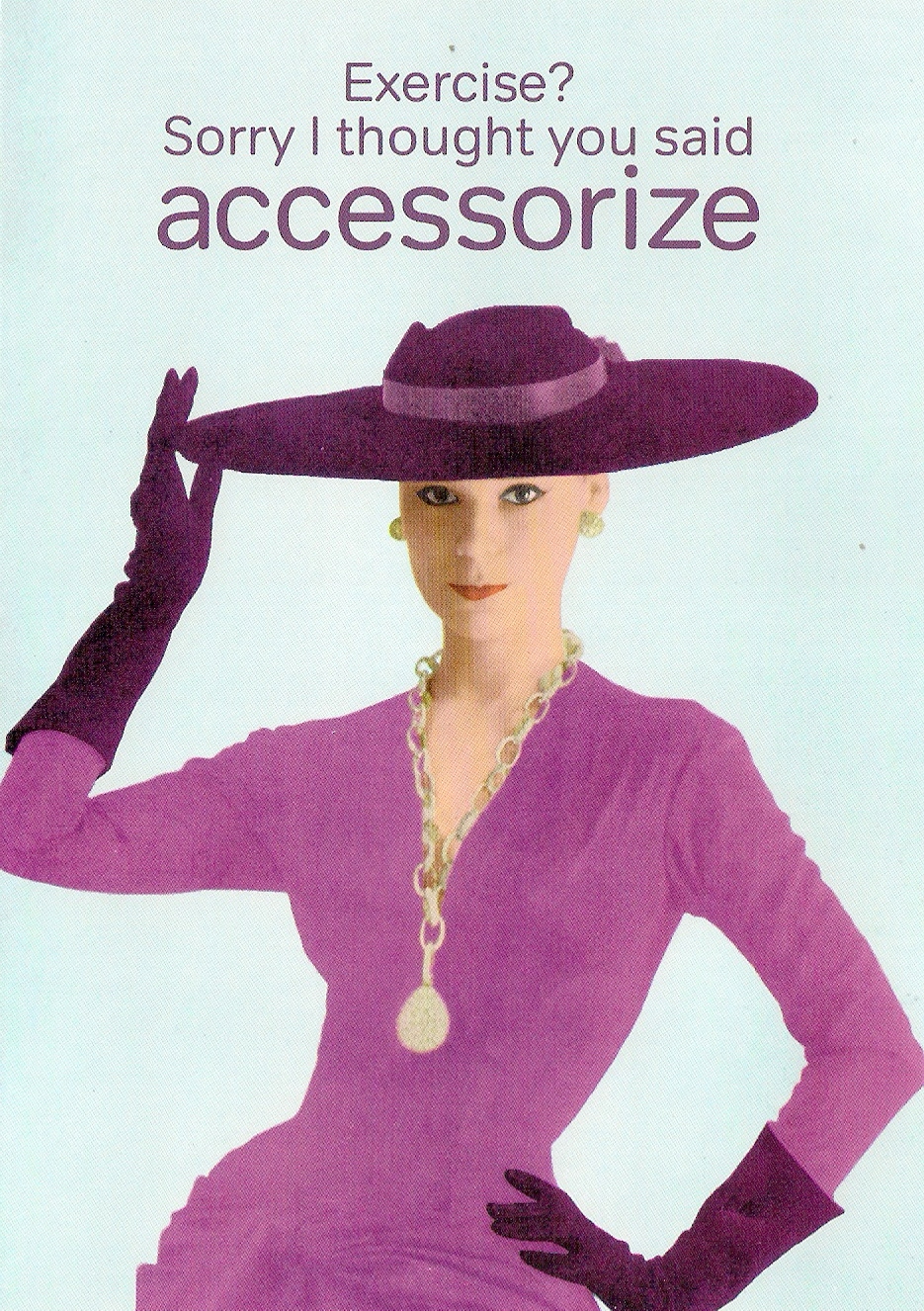
Accessorize greetings card from cathtatecards.com

Monday, 18 February 2013

Poetry

The Scots poet everyone's heard of: Robert Burns
Portrait by Peter Howson
One of the great things about my current Open University course on 20th century literature is that virtually every text I tweet about reading has fans who tweet back to say how much they love it. The novels Orlando (Virginia Woolf), Rebecca (Daphne du Maurier) and Do Androids Dream of Electric Sheep (Philip K Dick) seem particularly popular. And several people agree with me that Katherine Mansfield’s short stories should be more widely read. However, it was TS Eliot's poem The Love Song of J Alfred Prufrock that got the most responses, with several folk tweeting me their favourite lines from it. You may recognise some of these, even if you've not knowingly read the poem:
I have measured out my life in coffee spoons
I should have been a pair of ragged claws / Scuttling across the floors of silent seas.
I grow old . . . I grow old . . . / I shall wear the bottoms of my trousers rolled.
So here's a confession: I rarely read poetry out of choice. Yet when I do, I am full of admiration for its precision, its skilful use of language, its sheer cleverness. Perhaps what holds me (and many others) back is that most poems don't give up all their treasures on one reading. You have to read them over and over again just to understand what they're going on about. And even then a poem's 'meaning' may elude you. But don't let that put you off. I see poetry as proof of that old saying: 'tis better to travel hopefully than to arrive'. 

I'm not going to paste in endless poems - that would make this a very long post. Besides, many are available, free to enjoy, at the click of a mouse. What I've done is list a few of my favourites, with links to sites where you can read them. Choose one and have a go! They’re in no particular order and cover everything from love poetry to sheer nonsense. 

And for you writers out there, poetry is a splendid source of book titles. For example, Val McDermid must surely have taken The Mermaids Singing from this line in ‘Prufrock’: ‘I have heard the mermaids singing, each to each’.

To His Coy Mistress by Andrew Marvell – one of the great romantic poems
The X Files: Bonnybridge, October ’95 by Hugh McMillan – Scottish and hilarious (thanks to Rosemary Kaye for this one!)
The Thought-Fox by Ted Hughes – for every writer 
To A Louse by Robert Burns – Burns is best enjoyed out loud so this link also offers a reading by Robert Carlyle
Jabberwocky by Lewis Carroll – a splendid nonsense poem
Warning by Jenny Joseph – a battle-cry for middle-aged women

Wilfred Owen
commemorative window

Dulce et Decorum Est by Wilfred Owen – one of the greatest anti-war poems ever
Skipping by Marina Sofia – this poem is on the wall above my desk, a source of comfort when I worry about my writing

Do you have a favourite poem? I’d love to read it, so please leave a comment below or tweet me: @janetokane.

Friday, 4 January 2013

I ♥ books

1992: Reading with a cat. What could be nicer?

When I set out to do the Eclectic Reader Challenge last January, reading 12 books in 11 different genres in a year seemed achievable. However, I hadn’t then decided to embark on the final year of my Open University degree. When I signed up in early September to study Course A300: 20th Century Texts, it became obvious I wouldn’t only be sacrificing writing time. The course has 16 set books, ranging from 1930s poetry to 1960s science fiction, and an infinite number of reference books. The amount of reading this requires reminds me of what a tutor said when I studied for a year at Edinburgh University as a mature student: “Reading for pleasure? We’ll soon knock that out of you.”

I hoped then, and still do, that he meant we would have so much course reading we’d have no time to read anything else. Because I can’t imagine ever not wanting to read. How dreadful it would be not to relish choosing the next book to take down from my shelf or select from the list on my Kindle, to no longer feel the thrill of starting that first page. Even if a book disappoints, I still get a sense of achievement at finishing it, and as a writer, it’s instructive working out what went wrong. And if it has been a satisfying read – what joy!  

Reading is a way of life for me, and when I look back to my childhood I can see why. So many memories connected with reading stand out in my mind.

This was c. 1967, so pardon the decor
My parents were (and still are) avid readers themselves, so they knew that with the right groundwork I could develop into one too. Admittedly, growing up as an only child in rural Dorset at a time when there were only three TV channels, I had little choice in the matter. I had to read or take up a sport (I’ll pause briefly for those of you who know me stop laughing at that idea.)

Mum worked as a hairdresser from home in those days, her ‘salon’ a room at the end of the house kitted out with a sink and two hairdryers on wheels. This being the 1960s, she mostly did shampoo-and-sets and the occasional perm, and when each customer’s hair had been put into rollers they sat under a dryer. When I was very young I would persuade some of them to forgo the pleasures offered by the magazines provided and instead read my storybooks to me. As I grew older I got pushier and insisted on reading out loud to a favoured few, the word ‘loud’ being apt – those hairdryers were very noisy.

The books in my primary school’s library – a large cupboard, really – were augmented by fortnightly visits from Dorset County Council’s mobile library or, as it was known then, the Library Van. I’d feel very grown-up climbing up the steps unaided, making my own choices, then cycling home with a basketful of books. Enid Blyton’s Famous Five were my heroes for a long time. I once announced to my parents that I wanted to be called George, though I don’t remember their response. 

Then I progressed to Blyton’s Malory Towers series. This resigned me to having a girl’s name but left me hankering after a boarding-school education with all the lacrosse and midnight feasts that came with it. Mum and Dad took me every Saturday to Beeches Bookshop in Salisbury. The lovely building is still there but Beeches closed down long ago. In the early ‘70s, though, it was stuffed to the rafters with books old and new, most in rows on open shelves, some so precious they were kept in locked glass-fronted cabinets. You could buy four hardback children’s books for £1, and they’d take them back later in part-exchange for yet more. Angela Brazil’s schoolgirl adventures, with titles like The Nicest Girl in the School and A Fourth Form Friendship, were already past their heyday by then but I didn’t care.
1969: I was a swot

When I was a teenager, there being no such thing as young adult fiction back then, I started reading what Mum read: crime fiction. The rest, as they say, is history.

I started this blog post intending to examine the difference between reading for pleasure and reading for study. It’s been hijacked by my childhood recollections, which probably means I’m older than I like to think. Anyway, I have a subject for another post now. In the meantime, what memories of childhood reading do you have?